
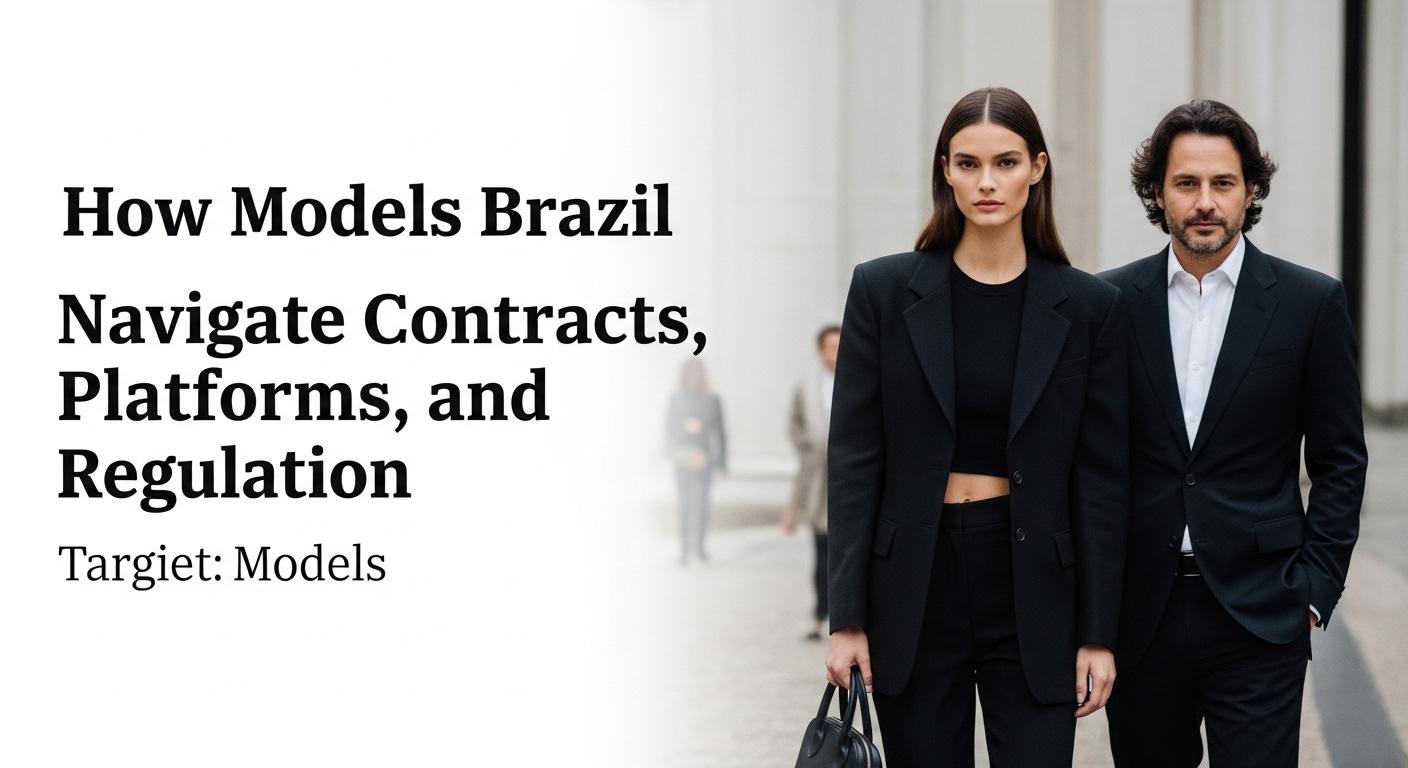
In Brazil’s vibrant fashion economy, the debate over digital modeling and AI governance is no longer abstract. how Models Brazil navigate regulatory shifts, platform policies, and industry expectations will help determine whether Brazilian talents can sustain a thriving, ethical career as technology reshapes the runway and the lens.
Context: Brazil’s Modeling Industry in the Digital Turn
The Brazilian modeling scene sits at a crossroads where traditional scouting and studio shoots meet the speed of online portfolios, influencer collaborations, and synthetic imagery. Agencies increasingly balance live casting with digital catalogs, while brands test new formats—virtual fittings, augmented reality fashion shows, and AI-assisted design. This shift creates opportunities for a broader range of talents but also intensifies competition, contract complexity, and the need for clear rules about consent, compensation, and intellectual property. In this environment, models, agencies, and brands must align on a shared basic: the value of human labor alongside emergent digital assets. The path forward depends less on a single policy and more on how operators interpret and implement responsible practices across workflows, from scouting to post-production.
Policy and Governance: Global Trends Meets Local Reality
Global discussions about AI governance affect how Brazilian players structure agreements around likeness rights, data use, and synthetic models. As debates about verification, consent, and the reuse of images move from boardrooms to regulatory offices, Brazil faces the practical task of translating broad principles into concrete contracts and enforcement mechanisms. The recent spotlight on AI policy at international summits—where conversations about governance visions sometimes diverge from immediate national needs—highlights a tension: international norms can accelerate protections, but local systems must adapt to uneven enforcement, varying platform policies, and the realities of a fragmented digital economy. In Brazil, the challenge is less about drafting new sweeping rules and more about embedding clear standards into everyday practice—clear consent for image use, transparent compensation models for both live and digital work, and accessible dispute resolution channels for models of all experience levels.
Impacts for Models and Agencies: Opportunities and Risks
For models, the digital shift expands potential income streams through licensing, virtual appearances, and collaboration with brands that seek scalable, global reach. For some, that means supplementary revenue without the travel demands of traditional photo shoots; for others, it means negotiating the value of their image in a portfolio increasingly composed of real, augmented, and synthetic elements. Agencies and brands face the flip side: the risk of unauthorized replication, misrepresentation, or unequal bargaining power when digital likenesses are treated as interchangeable assets. IP considerations, consent frameworks, and clear boundaries on how and where an image may be used become essential tools. The most sustainable models will be those that couple openness to innovation with rigorous guardrails—contracts that spell out usage limits, compensation for derivative works, and assurance that models are fairly credited and protected in all media forms.
Another layer of complexity arises from representation and inclusivity. Digital tools can democratize access to opportunities, yet they can also reproduce biases if datasets and algorithms remain unexamined. Brazil’s diverse modeling community benefits from policies that promote transparent consent practices and equitable access to opportunities, while also encouraging brands to diversify casting beyond conventional norms. The practical implication for stakeholders is straightforward: adopt consistent, auditable processes for model representation, prioritizing consent and fairness alongside efficiency and scalability.
Path Forward: From Regulation to Practice
What works in theory must translate into contracts, platforms, and training programs that bolster both model autonomy and industry viability. For agencies, this means embedding standard templates for image rights, usage scopes, and duration of licenses that recognize both live and digital outputs. For brands, it means setting expectations for ethical collaboration, ensuring that synthetic assets used in campaigns are properly licensed and disclosed, and investing in talent development that balances classic modeling with digital fluency. For policymakers, the practical agenda includes supporting dispute resolution mechanisms, promoting transparency in platform policies, and encouraging cross-sector collaboration to standardize consent and compensation frameworks across live shoots and digital productions. The overarching aim is to create a coherent ecosystem where innovation is guided by fairness, accountability, and sustainable livelihoods for models who contribute to Brazil’s creative economy.
Actionable Takeaways
- Adopt standardized image-rights contracts that specify scope, duration, and compensation for both traditional and digital/AI-aided productions.
- Implement transparent consent processes for use of likeness across all media, including synthetic or augmented representations, with opt-out options and clear dispute avenues.
- Develop industry guidelines that address data handling, dataset provenance, and responsible use of AI in casting, retouching, and production workflows.
- Encourage brands and agencies to publish annual diversity and inclusion metrics related to casting and representation in campaigns that involve digital assets.
- Invest in training programs for models and staff on rights management, platform policies, and ethical collaboration to reduce compliance risk and increase bargaining power.







Leave a Reply